
Written: March 13, 2026
Updated: March 15, 2026
Every morning, millions of Indian households turn on their gas stoves without a second thought. That simple act is now under threat, from a 21-mile-wide strip of water half a world away.
The Strait of Hormuz crisis 2026 has transformed a simmering West Asia conflict into a full-blown global energy emergency, and India, one of the world’s largest oil importers, is staring down consequences that could hit every kitchen, every fuel pump, and every farm in the country.
What Is the Strait of Hormuz and Where Is It Located?
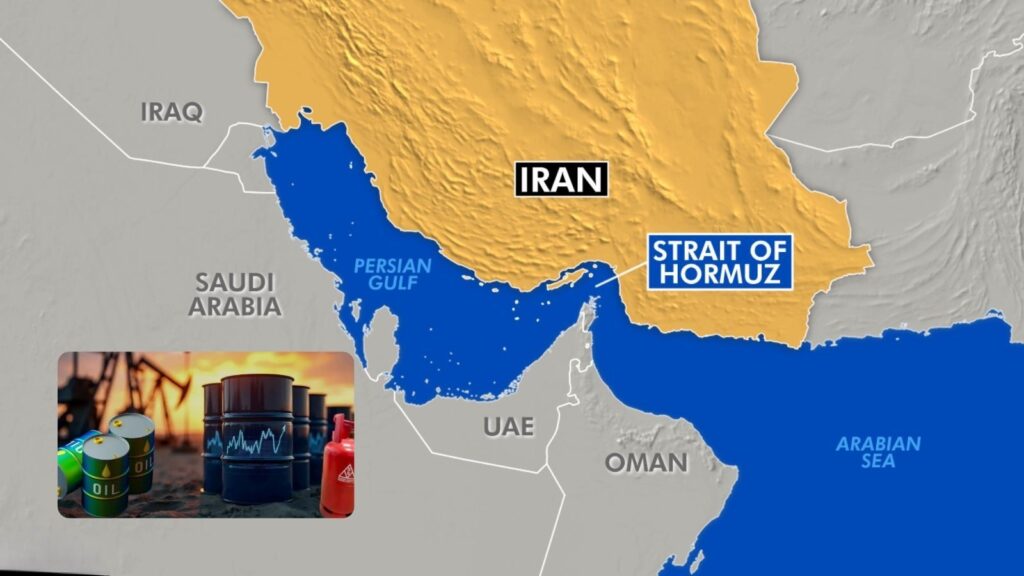
The Strait of Hormuz is a narrow but extraordinarily vital maritime chokepoint located between Iran to the north and Oman and the United Arab Emirates to the south. At its narrowest, it measures just 21 miles across, connecting the Persian Gulf to the Gulf of Oman, and from there, to the Arabian Sea and the world’s major shipping lanes.
Despite its modest width, no waterway on earth carries more economic weight. The strait is the world’s single most important global oil chokepoint, through which an estimated 20 million barrels of crude oil and petroleum products pass every single day, nearly 20% of the world’s total petroleum consumption. According to the International Energy Agency (IEA), close to 34% of all global crude oil trade transited through the Strait of Hormuz in 2025 alone.
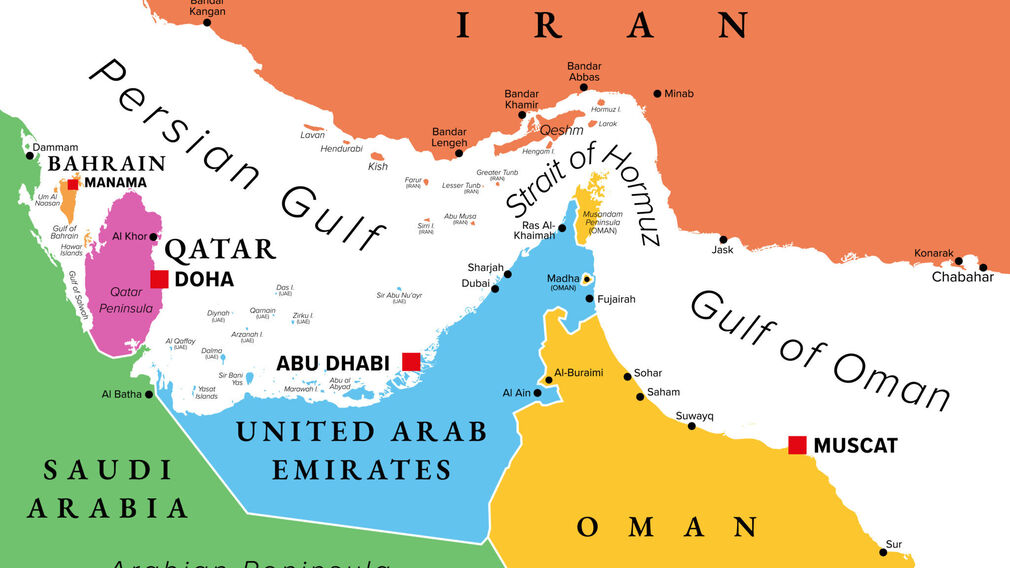
But oil is only part of the story. The strait is equally critical for India LNG imports, liquefied petroleum gas, raw materials for fertilizers, aluminium, and steel. Roughly one-third of global fertilizer trade, a figure with enormous consequences for food security worldwide, also flows through this narrow corridor.
The 2026 Crisis: How the Strait of Hormuz Was Closed
Operation Epic Fury and Its Fallout
The current Strait of Hormuz crisis 2026 was triggered on February 28, 2026, when the United States and Israel launched coordinated military strikes on Iran under Operation Epic Fury, strikes that included the killing of Iran’s Supreme Leader Ali Khamenei.
Iran’s response was swift and devastating. The Islamic Revolutionary Guard Corps (IRGC) launched retaliatory missile and drone attacks on US military bases, Israeli territory, and Gulf state facilities, while simultaneously issuing warnings that prohibited vessel passage through the strait. Within days, tanker traffic dropped by approximately 70%, with over 150 ships anchoring outside the strait rather than risk an attack. Shortly thereafter, traffic fell to virtually zero.
Iran’s Drone Strategy: A Blockade Without a Navy
Iran didn’t need a traditional naval blockade to bring global shipping to its knees. IRGC drone attacks on ships near the Hormuz corridor were enough. Insurers and shipping companies, unwilling to expose vessels and crew to missile and drone fire, simply refused to enter the waterway. The United Kingdom Maritime Trade Operations (UKMTO) reported 17 incidents affecting vessels in and around the Persian Gulf, Strait of Hormuz, and Gulf of Oman between February 28 and March 11 alone, including 13 confirmed attacks.
On March 5, the IRGC announced a partial easing, stating the strait would remain closed only to ships from the US, Israel, and their Western allies. For India, this distinction, however fragile, opened a narrow diplomatic window.
Oil Markets in Shock
Brent crude oil prices surged, briefly crossing $100 per barrel after multiple tanker attacks off the Iraqi and Iranian coasts. The IEA and the United States announced a record release of 400 million barrels from strategic petroleum reserves in an attempt to stabilise global oil markets, the largest such release in history.
Strait of Hormuz India Impact: A Multi-Front Crisis
The Oil Import Emergency
The Strait of Hormuz India impact is sweeping. Approximately 60% of India’s crude oil imports originate from the Middle East, with the overwhelming majority transiting through the strait. Petroleum Minister Hardeep Singh Puri confirmed that New Delhi has moved aggressively to diversify: non-Hormuz sourcing has risen to roughly 70% of crude imports, up from 55% before the conflict erupted. Indian refiners have simultaneously ramped up domestic LPG production by 28%.
Despite the current geopolitical situation involving major energy producers, our energy imports are secure and continue to flow from different sources using non-Hormuz routes.
— Hardeep Singh Puri (@HardeepSPuri) March 12, 2026
We are comfortably placed and are able to meet the energy requirements of our citizens.
There is no… pic.twitter.com/rr2YTIXBMB
A 50% surge in Russian oil imports was recorded in the first 11 days of March 2026, jumping from an estimated 0.8–1 million barrels per day to approximately 1.5 million barrels per day, as Indian refiners scrambled to replace Gulf supplies. Rerouting vessels via the Cape of Good Hope has added significant cost and transit time, further pressuring supply chains.
The LPG Shortage India Is Facing
The most immediate pain point for ordinary Indians is the LPG shortage in India 2026. India imports roughly 67% of its LPG requirements, with approximately 90% of those imports transiting through the Strait of Hormuz. The disruption has created what the government itself has called a “crisis situation.”
The Ministry of Petroleum and Natural Gas has directed oil refineries to prioritise household LPG supply for the 330 million Indian households that depend on it as their primary cooking fuel, at the expense of commercial LPG users. LPG prices are already rising, with domestic cylinders approaching ₹900 in several cities, while commercial LPG cylinders used by restaurants and eateries are touching ₹1,800–₹1,900. Thousands of small businesses are at risk of closure.
On March 9, 2026, the government invoked the Natural Gas Control Order under the Essential Commodities Act, protecting household and CNG/PNG supplies at 100% while cutting supply to refineries and petrochemical units by 35%.
India’s Diplomatic Play: Talking to Tehran
With 28 Indian-flagged merchant vessels stranded in the Persian Gulf, New Delhi has opened direct talks with Tehran, seeking safe passage guarantees for Indian ships through the Strait of Hormuz. India’s unique position, not part of the US-led Western alliance and historically maintaining ties with Iran, gives it limited but real diplomatic leverage that few other nations currently possess.
The Rupee, Agriculture, and the Bigger Economic Threat
The Indian rupee is under mounting pressure. Analysts warn that USD/INR could rise above 95 if the conflict is sustained and the strait remains effectively closed. Every $10 per barrel increase in oil prices widens India’s current account deficit by 0.4–0.5% of GDP, a figure that compounds quickly at current price levels.
Beyond oil and LPG, the deeper, slower-moving threat lies in fertilizer supply disruptions. With one-third of global fertilizer trade, including critical nitrogen exports — transiting through the Strait of Hormuz, India’s agricultural productivity and food security face a structural risk that could take months to fully materialise, but could ultimately threaten the livelihoods of 140 million farming households.
What Happens If the Strait of Hormuz Stays Closed?
The IEA estimates that only 3.5 to 5.5 million barrels per day could realistically be rerouted through alternative pipelines, a fraction of the nearly 20 million barrels that normally flow through the strait. There is simply no adequate substitute for this chokepoint.
If the Iran blockade on shipping persists, the consequences for India’s energy security, and by extension, its inflation, its farmers, its currency, and its economic growth — will deepen with every passing week.
Also read: Induction vs LPG in 2026: Which is Really Cheaper to Cook With After the Price Hike?
India’s Moment to Act
The Strait of Hormuz crisis 2026 is not a distant geopolitical event. It is already inside Indian homes, in gas cylinder prices, at petrol pumps, and on grocery shelves. New Delhi’s response so far, diversifying crude sources, ramping up Russian imports, invoking emergency energy laws, and engaging Tehran diplomatically, reflects both the urgency and the complexity of India’s energy security challenge.
Whether the strait reopens in days, weeks, or months, one lesson is already clear: India’s dependence on a 21-mile chokepoint it cannot control is a vulnerability the country can no longer afford to ignore.
Also read: Forget Maldives, Phuket, or Bali: Why Andaman is India’s Smartest Tropical Escape This Summer
Latest News on the Strait of Hormuz
The US President, Donald Trump has urged other nations to send warships to help secure the Strait of Hormuz and re-establish one of the world’s busiest shipping lanes. He said the US Navy will soon begin escorting merchant vessels through the narrow strait to ensure shipping continues from the passage.
Trump added, “Hopefully China, France, Japan, South Korea, the UK, and others, that are affected by this artificial constraint, will send Ships to the area so that the Hormuz Strait will no longer be a threat by a nation that has been totally decapitated.”
Reported and written as of March 13, 2026, updated on March 15, 2026. This is a developing story. Updates will be added as the situation evolves.