

There are numerous articles and videos on the Internet about growing your own food in apartment balconies. The idea is romantic and arguments in favor of savings, freshness, and quality of food appear to be winning.
I have myself been eager to grow fresh vegetables, herbs, and fruits in our apartment balcony, given that I was raised in a house that had a courtyard where we used to grow a lot of food for our family. However, when life changed and the majority of us Indians moved to apartments, we never grew anything except a few ornamental plants. This though did not stifle my desire to grow something edible and fulfill my desire to have a balcony kitchen garden.
I tried my hand at lady finger, brinjals, chilies, peppers, cauliflower, lettuce, tomatoes, spinach, coriander, radishes, carrots, beans, peas, fenugreek, mint and many more. I will share my experiences with you and if you are convinced you want to take the plunge, I will share some acquired wisdom on balcony kitchen gardens and how they are different from land-based kitchen gardens. If you are convinced and stay with me till the end, I will then share some tips for a successful food harvest from a balcony kitchen garden.
Growing Food in a Balcony Kitchen Garden
As I began sowing or planting plants for my balcony kitchen garden, I ran into many hurdles which I will list and explain below:
- Space – For any balcony kitchen garden to be viable, you need to grow a crop in at least 8-10 sq. ft. of space. Which means that if you plan to grow 3-4 crops a season, be ready to allocate about 50 sq. ft of space. This is generally the size of the entire balcony in an average Indian apartment.
- Seeds often do not germinate – Most seeds that are bought from plant nurseries or online, have a very low germination rate and sprout unpredictably. Either you do not get enough plants to get a reasonable harvest, or they sometimes germinate unevenly, adding another task to transplant them evenly throughout the bed.
- Water – Initially my plants used to start off healthy and green but soon they would start becoming weak and would produce very little fruit and/or foliage. Then I discovered that water was the main culprit. Across India, the tap water supplied in apartments has very high TDS (as high as 2000-2500 ppm in some places) which is a slow poison for plants. So then, either you water your plants from your kitchen RO machine or order separate 20-litre water bottles. Unless the water has below-500-ppm TDS, the plants will not be able to produce a good harvest.
- Fertilizer – Since, like farmers, you cannot process cow-dung manure yourself, you have to rely on store-bought fertilizers such as vermicompost and apply it to your plants every 15 days or so.
- Diseases and Pests – Food plants are generally delicate and are prone to diseases and infections. Mealybug infestation, fungal infections, over and under watering are just a few to name. Kitchen garden plants are not grow-and-forget type of variety. They need constant monitoring for the first signs of disease and infections. These plants get in shock very easily and then stop producing fruit or foliage to conserve energy.
- Sunlight – Whether your apartment balcony gets enough light, no light or too much light, is also an important consideration before you start a balcony kitchen garden. Different plant varieties require different amounts of sunlight and you have to the consider conditions in your balcony before you start a kitchen garden in your balcony.
- Commitment – Plants are like pets or children. You are tied to them. If everyone in the family is planning to be away from the apartment for over a week, then watering the plants becomes a big concern. Either you invest more money in a balcony drip irrigation system or take favors from neighbors to water your plants.
As I ran into these hurdles, I realized, ‘Growing food in balconies’ makes a wonderful topic for an article for a lifestyle magazine but is not as simple as it sounds. I purposely took you through the hurdles first because if you are ready to overcome these hurdles and are still reading this article, it means you really want to give it a try.
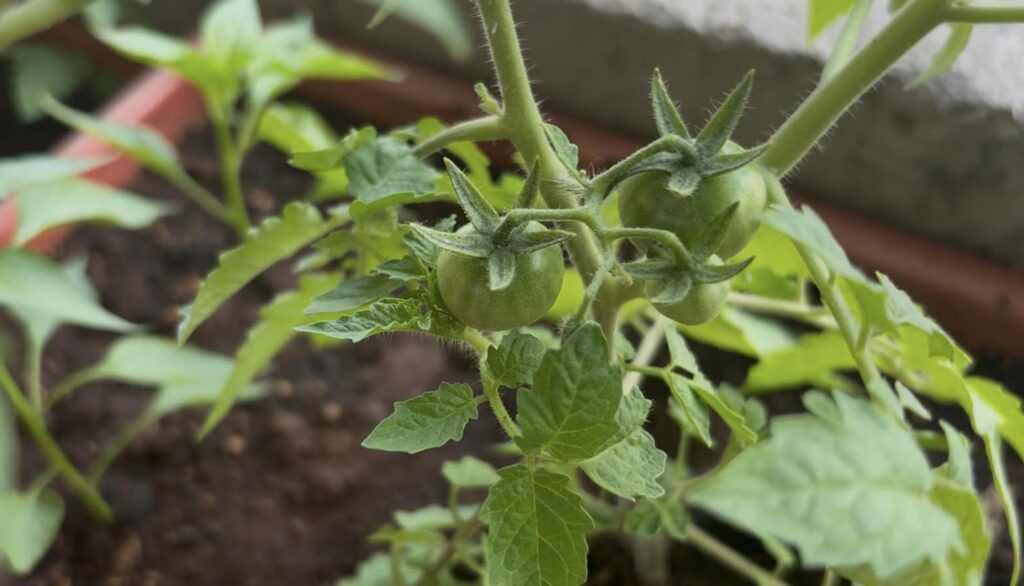
If that is the case, I tell you after taking all the trouble and investing some time and money, there is nothing more satisfying than looking at those bright red tomatoes hanging from plants in your balcony that you can pluck at will and add them to your salads or food preparations.
All that is required is a lot of patience, some time every week (4-5 hours), and a reasonable level of commitment to care for your plants.
Does it sound exciting? If yes, then you are the type who will successfully raise a garden in your balcony and harvest fresh salads and vegetables. Oh yes, before anything else, do not consider growing your own food in the balcony to be a cheaper alternative to buying from stores. Farmers and horticultural companies grow food in large quantities and the economies of scale and expertise are on their side. You cannot beat that. The whole idea of growing food in your balcony is not to save money, rather to indulge in the pleasures of harvesting your food yourself and that too as fresh as it can get.
What Type of Plants to Grow in Balconies
It is important to carefully decide what you will be growing in your balcony for food. There are plants that are grown for their foliage, fruit or their roots.
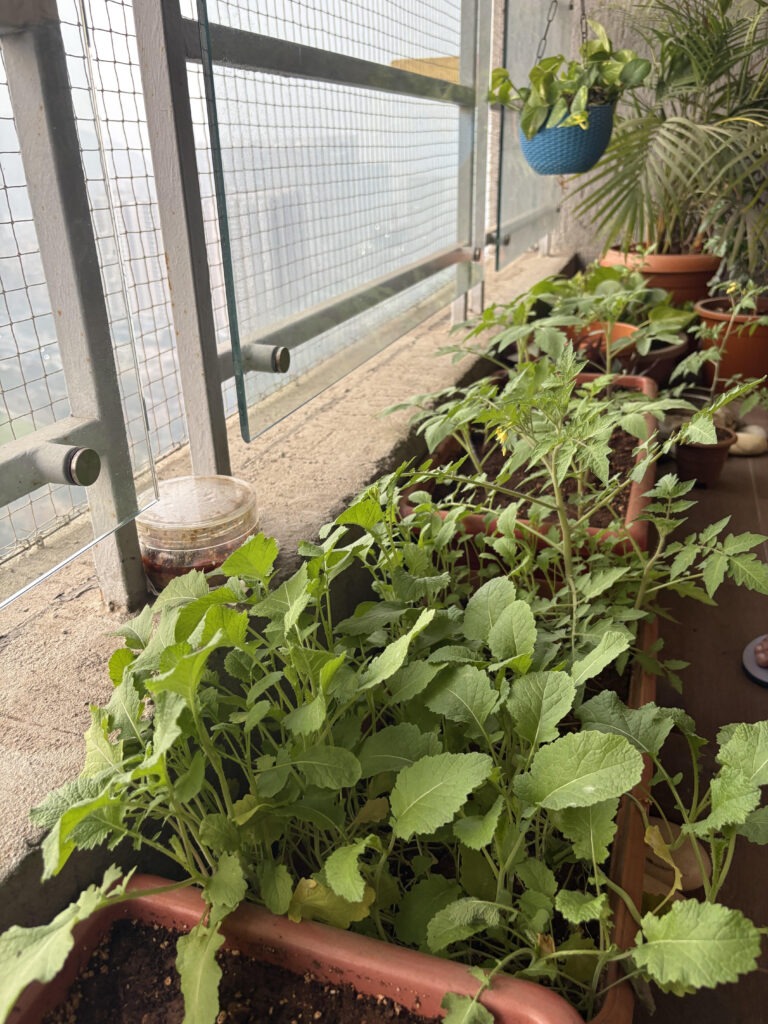
- Fruits and Vegetables – Plants such as tomatoes, peppers, brinjals, beans, chilies etc. grow well and even a few plants can produce enough harvest for a small family living in an apartment.
- Leafy Vegetables – Coriander, fenugreek, lettuce, and mint are grown for their leaves. These are easy to care for and there are no worries about their flowering and fruiting cycles. As long as they are producing enough fresh green leaves for you to use in salads, it’s fine.
- Roots and Tubers – Radishes, carrots, turnips, and potatoes can be grown for their roots or tubers. The only problem is, unlike fruiting or leaf producing plants, these plants give only one harvest and do not regrow after you have plucked them. Onions and garlic, can however, be planted for their green shoots rather than the bulbs in soil and in that case, you will get repeated harvest of spring onions or garlic leaves.
Fun-filled Family Activity
Growing your food in balcony gardens is not just a satisfying hobby, but can be a good learning for young children to see how food is grown. You can turn harvests into mini harvest festivals where everyone in the family can enjoy taking part in harvesting the crop. Not just harvesting, it is very satisfying to see the crop grow and to see fruits and vegetables appear and ripe on the plants.
With some trial and error and commitment, you can quickly gain working expertise in growing food in balcony gardens reasonably well and if you pursue and master your methods, who knows, you could end up bringing organically grown fresh food right from your balcony to the dinner table everyday for the rest of your life!