
The Tactical Traveler: NEVER Book These Seats on an Airplane on Your Next Flight – A Guide to the Best (and Worst) Seats
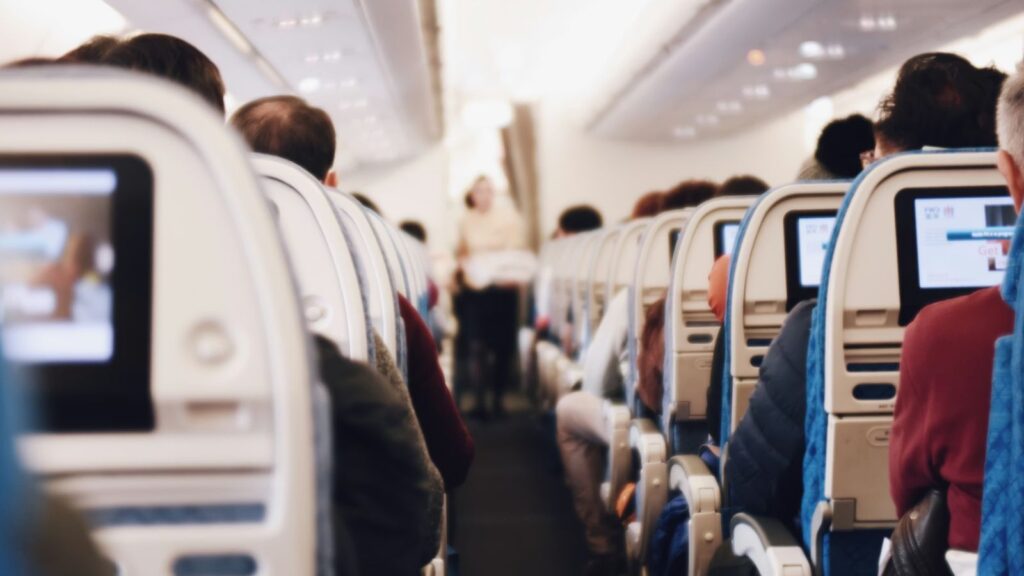

Most passengers choose a seat based on two variables: Window or Aisle. But for the analytical traveler, those are the least important factors. From “dead zones” in the air conditioning to the physics of survival, where you sit is a tactical decision that dictates your physical state for 48 hours after you land.
The modern airline cabin is an exercise in compromise. For the airline, it is a puzzle of weight, balance, and revenue density. For you, the passenger, it is a high-altitude social experiment where your choice of row can mean the difference between arriving at your destination ready to lead a board meeting or spending your first 24 hours in a haze of jet lag and physical soreness.
At TotemScroll, we don’t look at seat maps as a choice between “Window” or “Aisle.” We look at them as a series of tactical zones. Every aircraft is a pressurized tube vibrating at 500 miles per hour; where you place your body within that tube determines how much of that vibration, noise, and “human traffic” you absorb.
In 2026, air travel is set to become more efficient but arguably less human. Seats are thinner, pitches are tighter, and “tarmac delays” have become a statistical likelihood rather than a rare annoyance. In these scenarios, the “best seat” changes. If you are stuck on the tarmac for two hours with the engines off, the air circulation in the back of the plane will fail long before the front. If you hit severe CAT (Clear Air Turbulence) over the Himalayas, the passenger in the last row will experience a “tail-whip” effect while the passenger over the wing remains relatively still.
This guide is designed to move you past the marketing and into the mechanics. We will analyze the cabin through the lenses of safety, biology, and social engineering to ensure that on your next flight, you aren’t just a passenger, you’re a strategist.
The Physics of the Cabin: Stability, Sound, and Air
To the analytical traveler, an airplane is not a static room; it is a long, flexible lever. Understanding the physics of the fuselage is the first step in avoiding the physical toll of air travel.
1. The Stability Zone: Negating Turbulence
If you are prone to motion sickness or anxiety during “bumps,” your seat selection is a matter of physics. An aircraft pivots around its center of gravity, which is located almost exactly over the wings.
- The Best: Seats directly over the wing spar. Like sitting in the middle of a seesaw, you experience the least vertical displacement during turbulence.
- The Worst: The extreme aft (rear). The “tail-whip” effect is real; because the tail acts as a lever, every small correction the pilot makes is magnified at the back of the plane.
2. The Acoustic Map: Noise and Vibration
The soundscape of a plane is dictated by the engines and the wind.
- The Best: Forward of the engines. Sound waves from the jet turbines are projected backward. Sitting in the front third of the cabin can be up to 10 decibels quieter than sitting behind the wings. This is why First Class is always in the front, it isn’t just for prestige; it’s for acoustic silence.
- The Worst: Rows 1-3 behind the engine exhaust and the very last rows. Here, you get a “dual-threat” of noise: the roar of the engines and the mechanical hum of the rear galley refrigerators and vacuum-flush toilets.
3. The Tarmac Trap: Air Quality and Temperature
Air conditioning in a plane is a flow system. Fresh air is usually “bled” from the engines and distributed through the cabin.
- The Best: Near the “Gasper” vents in the front-left. During a tarmac delay (when engines are off and the APU is running), the front of the plane receives the most consistent airflow.
- The Worst: The middle rows. These often become “dead zones” where air stagnates. In a full flight, the CO2 levels in the middle of a cabin can rise significantly faster than at the ends, contributing to that “heavy-headed” feeling upon landing.
Social Engineering: Service, Hygiene, and Egress
Once you understand the physics, you must navigate the social architecture of the flight. This is where your choice affects your time and your sanity.
1. The Egress Calculation (The Exit Strategy)
Time is the ultimate luxury. For the “Connection Chaser,” sitting in the aft is a strategic failure.
- The Data: On a standard narrow-body aircraft (like an A320), it takes approximately 1 minute per row to deplane. If you are in Row 32, you are looking at a 30-minute delay before your feet hit the jet bridge.
- The Best: Forward-left (Aisle). This provides the most direct line of sight to the door and ensures you are among the first to clear customs.
2. The Lavatory “Splash Zone”
The “worst” seat is often defined by its proximity to the lavatory, but the reason isn’t just the smell, it’s the human traffic.
- The Worst: Any aisle seat within 3 rows of a lavatory. You will be bumped by passengers waiting in line, subjected to the “blue light” every time the door opens during a night flight, and experience the “vacuum-seal” noise of the flush, which can reach 100dB, enough to interrupt deep REM sleep.
3. The “Service Flow” Strategy
Do you want your meal first, or do you want more space?
- The Best for Service: Front of the section. Flight attendants usually begin service from the front of each cabin class.
- The Best for “The Poor Man’s Lie-Flat”: The back third. On flights that aren’t 100% full, the front of the economy section fills up first due to “preferred seating” algorithms. The back of the plane is often the last to fill. An analytical traveler knows that an aisle seat in Row 5 is inferior to an entire empty row in Row 45.
Safety, Egress, and the “Tarmac Trap”
At TotemScroll, we look beyond the “Safety Card” in the seatback pocket. We analyze the cabin as a vessel that must be exited under duress. While flying is statistically the safest mode of transport, your choice of seat dictates your “reaction time” in the unlikely event of an emergency.
1. The Survival Gap: The “Five Row” Rule
Statistical analysis of aircraft accidents by the University of Greenwich suggests that passengers sitting within five rows of an emergency exit have significantly higher survival rates.
- The Tactical Best: The Exit Row. Not only do you gain legroom, but you are the “Master of the Door.”
- The Statistical Best: The Aft (Rear). While the front is more comfortable, the rear of the aircraft (behind the wing) has historically shown higher survival rates in hull-loss accidents because the front of the plane often acts as the “crumple zone.”
2. The Tarmac Delay: The Biological Reality
The “Tarmac Trap” occurs when a plane is held on the ground with engines off. In this scenario, the plane’s Auxiliary Power Unit (APU) struggles to maintain air pressure and temperature.
- The “Heat Sink” Zone: Avoid the middle of the cabin. Heat rises and stagnates here. Because the airflow enters from the ends and moves toward the center to be exhausted, the middle rows become the most CO2-heavy and humid zones during a delay.
- The Egress Advantage: If a flight is canceled after a long delay, those in the front-left (A-B-C side) are the first to hit the jet bridge, often securing the first spots in the “rebooking line” at the gate.
Frequently Asked Questions about Airplane Seat Selection
Q1: What is the single safest seat on a commercial airplane?
A: Statistically, middle seats in the rear third of the cabin have the highest survival rate. This is because the rear often remains intact during impact, and the middle seat provides a human “buffer” on both sides, though it is the least comfortable for daily travel.
Q2: Is the “Bulkhead” seat actually better for tall travelers?
A: Not always. While you have no one reclining into you, you often cannot fully stretch your legs because of the solid wall. Additionally, all your luggage must go in the overhead bin, and the tray tables in the armrest make the seat slightly narrower.
Q3: Which seats are the quietest for light sleepers?
A: Choose a window seat in the front third of the cabin, forward of the engines. The window allows you to lean your head (with a pillow) against the fuselage, and the forward position keeps you away from the turbine roar and the heavy foot traffic of the galleys.
Q4: How do I avoid “Seat 0” (The Windowless Window Seat)?
A: Many aircraft (like the Boeing 737 or 787) have a “dead” row where a window is missing due to internal air ducts. Always check a site like Aerolopa or SeatGuru before booking; these are typically located in the mid-front of the economy section.
Q5: Are exit rows colder than the rest of the plane?
A: Yes. Because the exit door seals are slightly less insulated than the fuselage, and air from the outside is $-50^\circ\text{C}$ at altitude, exit row passengers often feel a significant draft. Bring an extra layer if you prioritize the legroom.
The TotemScroll Final Audit
Choosing a seat is the last moment of control you have before surrendering your autonomy to the airline. By applying an analytical lens to the physics of noise, the chemistry of air, and the social engineering of the cabin, you transform a 12-hour ordeal into a manageable transition.
Your Pre-Flight Checklist:
- Identify your Goal: Is it sleep (Front Window), connection speed (Front Aisle), or space (Aft Middle-Aisle on a low-occupancy flight)?
- Audit the Aircraft: Look for the “windowless” rows and avoid them.
- Check the “Splash Zone”: Ensure you are at least 4 rows away from any lavatory or galley.
- The “Wing-Spar” Test: If you fear turbulence, book as close to the wing’s leading edge as possible.
Do you have a “secret” row that you swear by? Or a horror story from the “Tarmac Trap”? Share this guide with your favorite travel partner and tell us your most strategic seat choice in the comments below.