
Why Fast Walkers Are Built Different: What Your Walking Speed Reveals About Your Secret Personality
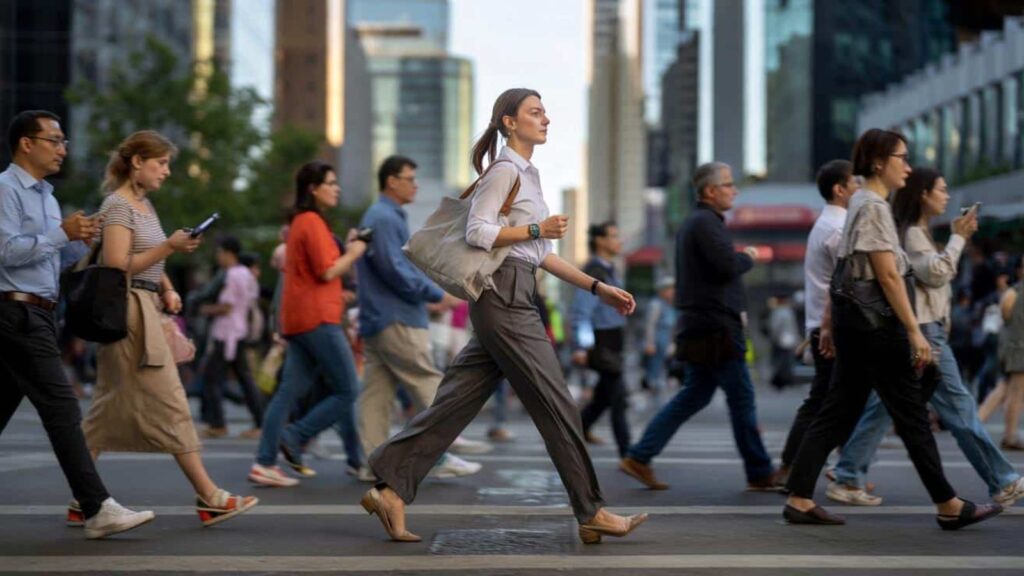

If you find yourself constantly overtaking others on the sidewalk, you’re not just in a hurry, you’re likely operating on a different psychological frequency than the rest of the world.
For decades, we’ve associated a brisk walking pace with simply being late or having a busy schedule. However, a wave of behavioral science research updated in late 2025 has confirmed a fascinating link between our “gait” and our core identity. It turns out that the way you move your feet is a non-verbal signature of the “Big Five” personality traits.
The Science of the “Purposeful Pace”
Recent longitudinal studies involving over 15,000 participants have identified that walking speed is a consistent indicator of Conscientiousness. People who walk faster than average tend to be more organized, goal-oriented, and disciplined.
According to behavioral scientists, fast walkers don’t just view walking as a physical necessity; they view it as a logistical task to be optimized. This “forward-leaning” approach to movement often mirrors their approach to career and personal goals.
The Extraversion Connection: Why Outgoing People Move Faster
It isn’t just about being organized. Research shows a direct correlation between Extraversion and physical velocity.
- Energy Levels: Extraverts typically exhibit higher levels of physical energy and social enthusiasm, which translates into a brisker pace.
- The “Eagerness” Factor: High scores in “Openness to Experience” are also prevalent among fast walkers. These individuals are naturally curious and often feel an internal “pull” toward their next destination or discovery.
What a Slower Gait Might Suggest
Conversely, the studies suggest that those with a slower, more deliberate pace often score higher in Neuroticism or cautiousness. While a slower pace doesn’t necessarily mean laziness, it often indicates a personality that is more reflective, cautious, or prone to overthinking.
Interestingly, a slow walk in high-stress environments can sometimes be a subconscious “protective” mechanism, whereas fast walking acts as a marker of high emotional resilience and stability.
The 2025 Health Bonus: Walking Speed and Longevity
Beyond personality, the latest data from 2025 highlights that maintaining a fast walking pace into middle and late age is one of the strongest predictors of cognitive health. Fast walkers show a significantly slower rate of brain aging and physical decline. Scientists believe the mental “drive” required to maintain a fast pace keeps the neural pathways sharper for longer.
Are You a “High-Velocity” Personality?
If you’re the person constantly weaving through the crowd on a busy street, you likely possess a high sense of urgency and a strong “Purpose in Life” score. You aren’t just trying to get to your destination; you are subconsciously demonstrating a life lived with intent.
Next time you’re stuck behind a slow walker, remember: you aren’t just faster, you’re likely more conscientious, extraverted, and prepared for the future.